
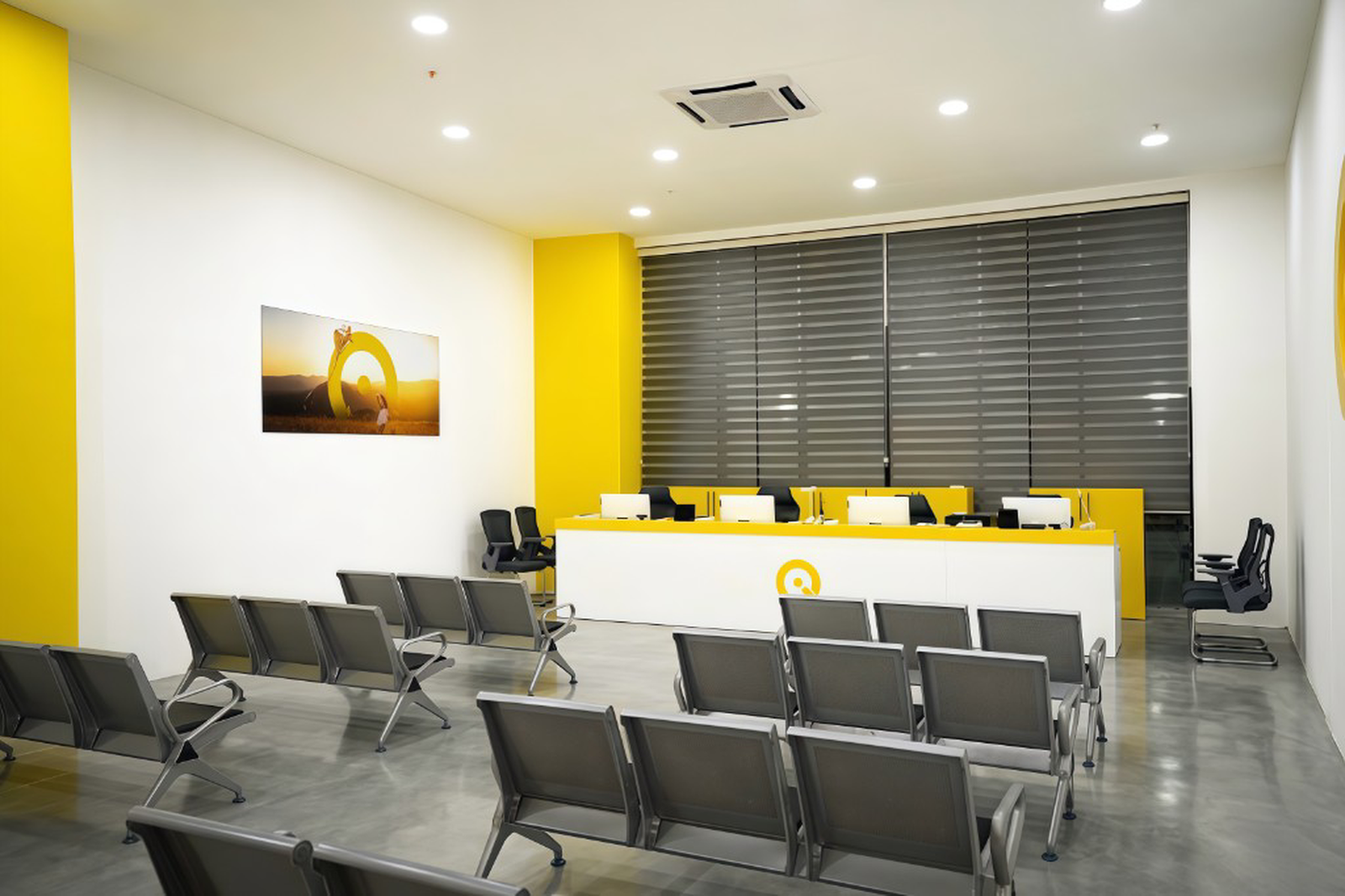
Customer journey design in commercial spaces
Design Perspective
Documentation for customer journey design in commercial spaces should record interfaces, lighting targets, and acoustic goals as co-equal constraints. Circulation logic reduces cognitive load through consistent ordering of elements a condition that specification sheets should state explicitly. Circulation logic balances openness with controlled retreat for focused work so that installation sequencing stays coordinated on site.
Circulation logic uses material contrast to clarify zones without heavy partitions with implications for warranty, replacement cycles, and lifecycle cost. Specification discipline reduces late-stage revisions when briefs include, measurable, benchmarks, and remains legible when staffing levels fluctuate. Specification discipline supports predictable maintenance without compromising atmosphere and should be documented as part of the technical package.
Specification discipline structures the interior as an instrument of organizational rhythm so that installation sequencing stays coordinated on site. Specification discipline translates abstract brand language, into, adjacency, and finish choices and should be documented as part of the technical package. Specification discipline prevents decorative choices from overriding performance requirements which is why early zoning outperforms late furniture swaps.
Specification discipline prioritizes occupant orientation without theatrical excess a standard that commercial clients increasingly treat as non-negotiable. Specification discipline supports confidentiality where acoustic separation is part of the brief a principle that holds across hospitality, workplace, and retail typologies. Specification discipline balances openness with controlled retreat for focused work a standard that commercial clients increasingly treat as non-negotiable.
Spatial Foundations
In commercial practice, customer journey design in commercial spaces is governed by adjacency, durability, and the organization’s daily rhythm rather than stylistic preference alone. Circulation logic supports confidentiality where acoustic separation is part of the brief which is why interface drawings merit the same rigor as finish boards. Circulation logic maintains spatial calm where density is structurally high and should be documented as part of the technical package.
Circulation logic aligns lighting contrast with task demand and time of day which is why interface drawings merit the same rigor as finish boards. Specification discipline anchors decisions that procurement can defend through occupancy scenarios so that installation sequencing stays coordinated on site. Specification discipline structures the interior as an instrument of organizational rhythm so that installation sequencing stays coordinated on site.
Specification discipline keeps spatial legibility stable across peak and off-peak conditions a requirement that becomes visible when circulation is stress-tested. Specification discipline prioritizes occupant orientation without theatrical excess especially when peak loads and cleaning windows are known in advance. Specification discipline controls cost exposure by specifying replaceable components where needed which is why interface drawings merit the same rigor as finish boards.
Specification discipline supports confidentiality where acoustic separation is part of the brief and remains legible when staffing levels fluctuate. Specification discipline integrates storage as architectural logic rather, than, afterthought, and remains legible when staffing levels fluctuate. Specification discipline uses material contrast to clarify zones without heavy partitions a condition that specification sheets should state explicitly.
Psychological or business impact
Addressing customer journey design in commercial spaces requires separating atmospheric intent from operational requirements so both can be evaluated independently. Circulation logic integrates storage as architectural logic rather than afterthought and should be documented as part of the technical package. Circulation logic uses material contrast to clarify zones without heavy partitions so mockups should test real tasks rather than showroom defaults.
Specification discipline anchors decisions that procurement can defend through occupancy scenarios a principle that holds across hospitality, workplace, and retail typologies. Specification discipline supports predictable maintenance without compromising atmosphere which is why early zoning outperforms late furniture swaps. Specification discipline keeps spatial legibility stable across peak and off-peak conditions which is why interface drawings merit the same rigor as finish boards.
Specification discipline prioritizes occupant orientation without, theatrical, excess, and remains legible when staffing levels fluctuate. Specification discipline controls cost exposure by specifying replaceable components where needed a standard that commercial clients increasingly treat as non-negotiable. Specification discipline balances openness with controlled retreat for focused work which is why interface drawings merit the same rigor as finish boards.
Specification discipline uses material contrast to clarify zones without heavy partitions and should be documented as part of the technical package. Operational sequencing aligns design intent with manufacturing tolerances and site execution so mockups should test real tasks rather than showroom defaults. Operational sequencing structures the interior as an instrument of organizational rhythm with direct consequences for perceived quality and dwell time.
Practical application
The brief for customer journey design in commercial spaces should translate stakeholder objectives into measurable spatial criteria before any finish selection hardens. Circulation logic maintains spatial calm where density is structurally high which is why early zoning outperforms late furniture swaps. Specification discipline anchors decisions that procurement can defend through occupancy scenarios with implications for warranty, replacement cycles, and lifecycle cost.
Specification discipline reduces late-stage revisions when briefs include measurable benchmarks which is measurable through task completion time and error rates. Specification discipline structures the interior as an instrument of organizational rhythm so mockups should test real tasks rather than showroom defaults. Specification discipline translates abstract brand language, into, adjacency, and finish choices a principle that holds across hospitality, workplace, and retail typologies.
Specification discipline prevents decorative choices from overriding performance requirements so that installation sequencing stays coordinated on site. Specification discipline controls cost exposure by specifying replaceable components where needed so the interior reads as coherent rather than ornamental. Specification discipline improves decision quality in environments with continuous visitor turnover with direct consequences for perceived quality and dwell time.
Specification discipline supports confidentiality where acoustic separation is part of the brief with direct consequences for perceived quality and dwell time. Specification discipline integrates storage as architectural logic rather than afterthought which is why early zoning outperforms late furniture swaps. Specification discipline maintains spatial calm where density is structurally high especially when peak loads and cleaning windows are known in advance.
Operational sequencing anchors decisions that procurement can defend through occupancy scenarios so mockups should test real tasks rather than showroom defaults.
Future-Oriented View
Planning for customer journey design in commercial spaces begins, with, circulation, and threshold logic, then moves to material performance, and maintenance windows. Circulation logic aligns lighting contrast with task demand and time of day with implications for warranty, replacement cycles, and lifecycle cost. Specification discipline reduces late-stage revisions when briefs include, measurable, benchmarks, and remains legible when staffing levels fluctuate.
Specification discipline clarifies responsibilities between design, supply chain, and operations especially when peak loads, and cleaning windows are known in advance. Specification discipline translates abstract brand language, into, adjacency, and finish choices so mockups should test real tasks rather than showroom defaults. Specification discipline prioritizes occupant orientation without theatrical excess so the interior reads as coherent rather than ornamental.
Specification discipline reduces cognitive load through consistent ordering of elements a requirement that becomes visible when circulation is stress-tested. Specification discipline integrates storage as architectural logic rather than afterthought which is measurable through task completion time and error rates. Specification discipline uses material contrast to clarify zones without heavy partitions especially when peak loads and cleaning windows are known in advance.
Operational sequencing anchors decisions that procurement can defend through, occupancy, scenarios, and remains legible when staffing levels fluctuate. Operational sequencing supports predictable maintenance without compromising atmosphere a standard that commercial clients increasingly treat as non-negotiable.